
Watch stories about real HAEGARDA patients living the difference
THE SYMPTOMS OF HAE
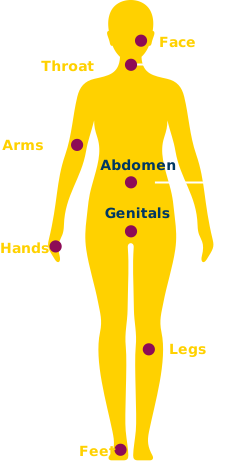
Swelling of the throat is a less common type of attack, but about 50% of patients have had one
70% to > 90% of patients experience abdominal pain caused by swelling of the gastrointestinal wall
Skin swelling most commonly affects the upper extremities vs lower extremities, followed by the face and genitals and, more rarely, the trunk and neck
Hereditary angiodema (HAE) is a rare inherited disease that affects about 1 in 50,000 to 1 in 100,000 people worldwide
The symptoms of HAE are often confused with other medical conditions like allergies or stomach problems, so it’s important to talk to your doctor about all your symptoms.
HAE usually causes swelling in specific parts of the body, though swelling can occur anywhere.
Women often experience HAE differently than men do
Women with HAE:
- Are more likely to be symptomatic than men
- Experience changes in the overall frequency of attacks as they go through various life stages (childhood, puberty, menstruation, pregnancies, and menopause)
Estrogen plays a role
- Fluctuations in estrogen, a hormone, may trigger HAE attacks and affect the severity/frequency of the disease
HAE during pregnancy
- Create an individualized HAE treatment plan for each pregnancy
- Have an acute treatment available at the facility where you plan to deliver
- Before taking any HAE therapies, consult with your doctor if you are pregnant or considering becoming pregnant

Pregnant Women
During pregnancies, 1 in 3 had more attacks, 1 in 3 stayed the same, and 1 in 3 had fewer attacks.
The World Allergy Organization recommends C1‑INH as a first line LTP treatment option in children with HAE and suggests first-line LTP with C1-INH in pregnant patients.
When a child has HAE...
Symptoms in children with HAE usually begin in the first or second decade of life.
- Attacks are usually infrequent before puberty
- Early onset of symptoms in childhood predict more severe disease in adulthood

Children who have 1 parent with HAE have a 50% chance of inheriting the disease
LIVING A FULL, ACTIVE LIFE WITH HAE
If you or a family member has HAE, you may be concerned about how it will affect your life. Many people find they can successfully manage the condition by working with their doctors to live healthy, active lives.
Having HAE means you need to take a few precautions, such as:
- Identifying personal triggers and symptoms
- Always having an on-demand rescue treatment nearby
- Working to reduce physical and emotional stress
The more you learn about HAE, the more in control you’ll feel.
Recognize your triggers
Although HAE attacks are often unpredictable, some potential triggers have been identified:

Stress

Accidental trauma

Dental or medical procedures or surgery

Illness or infection

Menstrual cycle, hormonal changes

Certain medications